
Rachel Li

Cataracts are the leading cause of blindness worldwide and is one of the most common conditions for those over the age of 60. For this project, we aim to identify genetic modifiers that cause nuclear cataract formation in mice. We are also trying to understand the molecular mechanisms that are responsible for cataracts in hope of developing ways to treat it.
Zahra Ansari

Colorectal cancer (CRC) is the second leading cause of cancer related deaths in the U.S., and one of the more common types of cancer experienced by South Asians. CRC incidence rate is rising for South Asians, however screening rates in South Asians remain relatively low. For the past two years, my research group and I have been organizing numerous health outreach events to disseminate information about the importance of colorectal cancer screenings in South Asian populations. This summer, I will be working to finalize a manuscript evaluating the accessibility and […]
Shruti Satrawada

This summer, I will continue to work at the Grinberg Lab (I started there in Fall 2017) on the AVID project where the ultimate goal is to alter the PET scan to be able to identify Alzheimer’s disease earlier in patients. My team works to scan high-quality images of slices of the brain. We then stitch these images together and use machine learning to identify concentrations of tau, a protein linked to Alzheimer’s, in the human brain. One of our final products will be a heat map of the analyzed […]
Camille Chen
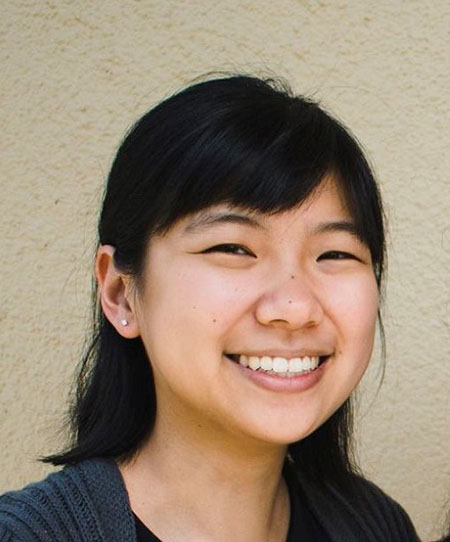
Pseudomonas aeruginosa is an opportunistic bacterial pathogen associated with serious lung, skin, and hospital-acquired infections, as well as a major cause of contact lens wear-related eye infections. This summer, I am focusing on the role of an uncharacterized gene in P. aeruginosa called PA4308 during infection. We hypothesize that PA4308 might play a role in regulating normal bacterial toxin secretion during traversal across host cells, and therefore that PA4308 mutants may be hypervirulent and possibly more capable of serious infection. By using corneal cell cultures and fluorescence microscopy, I hope […]
Julia Ornell

This summer I will be continuing to provide research assistance for Professor Rule’s book that discusses privacy rights in the digital era. I began working with Professor Rule in the Fall of 2018 when the book was still in the outline stage. This summer I will be helping Professor Rule with Chapters 3-6 of his book. The books seeks to reveal threats to online personal data and then recommend steps of action. My research focuses on privacy related laws, public opinion polls as well as violations and misuse of personal […]
Anna Boser
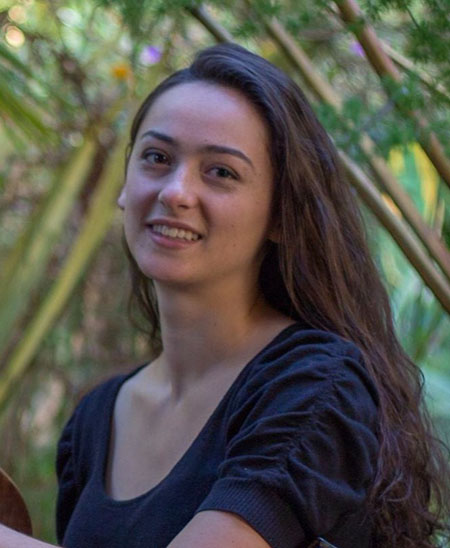
I will be going to Niger to analyse ethnographic research for the Center for Girls’ Education which is part of the OASIS initiative. The Center is expanding to Niger, and this research will allow it to take into account then specific dynamics and characteristic of rural Hausa communities in Niger in order to implement a more tailored program geared towards women’s empowerment in that region.
Xin Qi
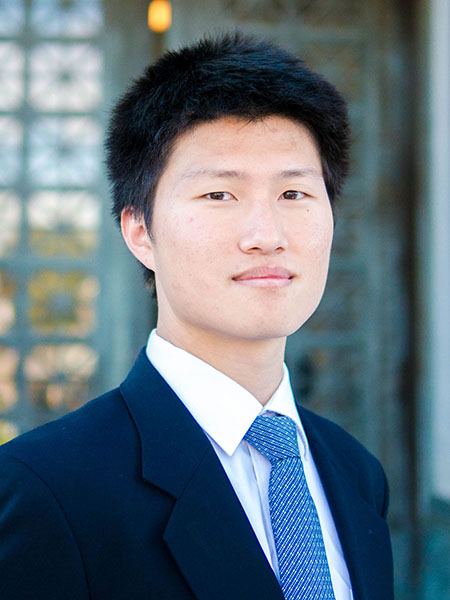
Previous RNA-Seq analysis on mouse embryos revealed non-canonical mRNA splicing involving retrotransposon (RT) elements during pre-implantation development. The retrotransposon-element derived, non-canonical isoforms appear to be the dominant isoform in over 200 genes during critical stages of development. Specific retrotransposon-element knockout mice had been made to investigate possible developmental roles of the non-canonical gene regulation and protein expression. Preliminarily, heterozygous crosses between mice lacking a single retrotransposon fragment shows a statistically significant shift away from the expected mendelian ratio. In this project, through biochemical, histological and biostatics analysis, I aim to […]
Zheng Oong
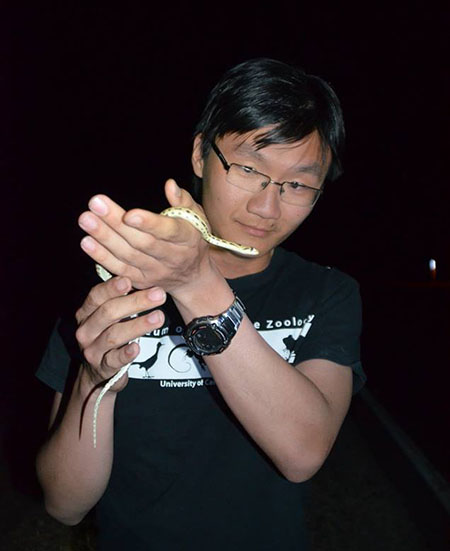
The Steller’s jay (Cyanocitta stelleri) is a species of jay that shows incredible morphological diversity across its range in the North and Central America. Our previous genetic work using nuclear DNA (microsatellites) and mitochondrial DNA has shown evidence of strong genetic structure across populations. This summer, I will be working closely with my mentor to thoroughly analyze both the microsatellite and mitochondrial DNA data to better understand patterns of population differentiation within the jays. Furthermore, we will also perform analysis of morphological and ecological niche data and compare them to […]
Julia Evered
Wetlands in the San Francisco Bay-Delta have been threatened by encroaching development, climate change and other environmental factors. Local organization and agencies have provided significant efforts to protect and restore the large amount of wetland ecosystems lost over a century of development. For several years, Dronova Lab has been collecting and analyzing vegetation data in the San Francisco Bay-Delta in order to provide quantitative support for restoration effort in the San Francisco Bay-Delta by identifying factors that can promote restoration success at the site and landscape scale. This critical knowledge […]
Suzanna Chak
This summer, I will continue to work on a project studying the role of macrophages in acute lung injury. Macrophages are part of the innate immune system and are important for preventing the spread of infection and in the healing process. We have been studying how macrophage affect fibrosis (scarring) of the lung and the local inflammatory response after injury.